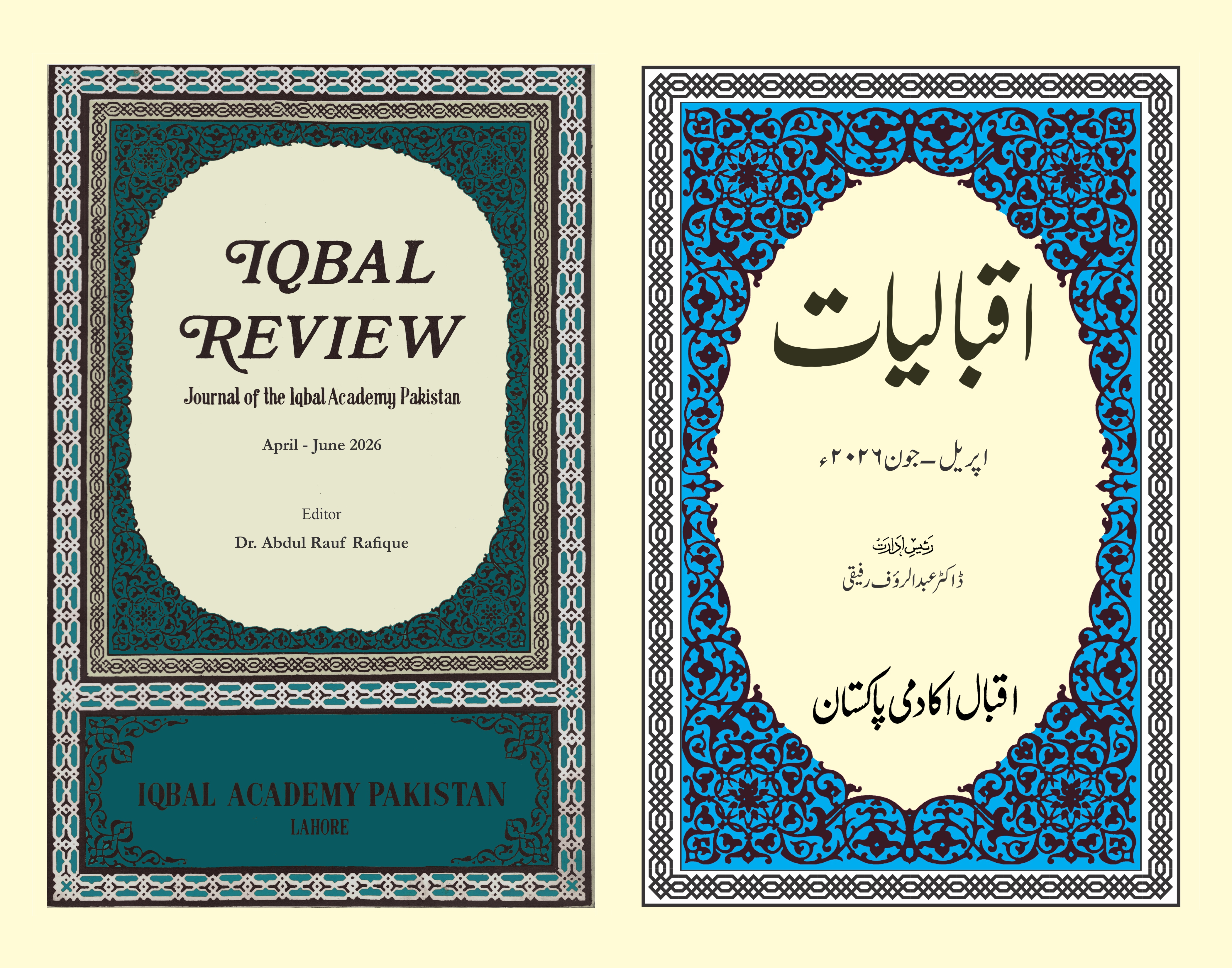
لارڈ میكالے كا تعلیمى نظریہ اور برصغیر كى فكرى و تہذیبى تشكیل
Lord Macaulay’s Educational Philosophy and the Intellectual and Cultural Formation of the Indian Subcontinent
Keywords:
Macaulay Minute (1835), Colonial Education Policy, Anglicist–Orientalist, Controversy, Language and Colonialism, Cultural Imperialism, Educational Transformation in South Asia, Allama Iqbal and Intellectual ResponseAbstract
This article examines the historical, intellectual, and cultural impact of British colonial educational policy in the Indian subcontinent, with particular focus on the role of Lord Thomas Babington Macaulay and his influential document, Minute on Indian Education (1835). It analyzes how British colonial rule transformed not only the political structure of the region but also its educational system, linguistic hierarchy, and intellectual orientation. The study situates Macaulay’s policy within the broader context of colonial governance, including the Charter Act of 1813 and the Anglicist–Orientalist controversy, which reflected competing views on the medium and content of education in India. Macaulay’s advocacy of English as the medium of instruction and his promotion of Western sciences and literature marked a decisive shift from traditional systems of learning based on Persian, Arabic, Sanskrit, and indigenous intellectual traditions. The article also explores the emergence of a new English-educated intermediary class that served colonial administrative interests while simultaneously shaping modern intellectual and political discourse in South Asia. Furthermore, it discusses the linguistic and cultural consequences of replacing Persian with English in administration and education, as well as the broader ideological framework of the British “civilizing mission.” The study highlights both the transformative and controversial dimensions of colonial educational policy, including its contribution to modern education, journalism, and constitutional politics, alongside its role in marginalizing indigenous languages and traditional knowledge systems. Finally, the article engages with later intellectual responses to this legacy, particularly the reflections of Muslim reformers and the philosophical critique of Allama Muhammad Iqbal, who sought to reconcile modern knowledge with indigenous cultural and spiritual traditions. The paper concludes that Macaulay’s educational policy was a complex historical phenomenon that reshaped the intellectual and cultural landscape of the subcontinent, leaving a legacy that continues to influence debates on education, language, identity, and modernity in South Asia.